


2021-02-02 19:35:58
Mike Krieger, an incredible innovator, entrepreneur, and corporate speaker, is best known for being a co-founder of Instagram. Spotting a gap in the market for a photo sharing app, Mike designed and developed the internationally successful social media site together with his partner, Kevin Systrom.
During his time as CTO, Mike successfully expanded the platform from a few million to one billion monthly active users. Now recognized as one of the greatest contributions to the field of social media, Instagram is a true testament to Mike's entrepreneurship, technology skills, and influential career.
Now a sought-after speaker, Mike offers expert advice to corporate audiences, tailoring his strategies and solutions to companies around the world. In this exclusive interview, Mike shares the secret to staying focused in the digital age, how to create a culture of innovation, and explains the importance of adaptability in the modern world.
Q: What was your initial vision for Instagram?
“We were very excited to take something that was new at the time, which was the cell phone with a camera, and make it really social.
“We wanted to do something that meant that the photos you took not only ended up on your camera roll, but became something that you were excited to share with your friends and beyond. We created a way of doing it that was mobile first, really fun and social, and something that no one had done before. "
Q: One of your main goals was to ensure that the platform provided opportunities for small businesses to thrive, why was this important to you, and how important is continued support from small businesses?
“We saw that there was a great opportunity for individual manufacturers, creators and small businesses to find a new audience. I am from Brazil originally, I grew up in Sao Paulo. I went home and saw how they used Instagram. Suddenly all of these stores, food stores, clothing stores, and small businesses that otherwise wouldn't have had a new market, were suddenly able to reach people on Instagram, sell via Instagram, direct messages, and develop new ideas. really creative commercials. .
“For us, Instagram is so much about expressing your creativity, that it can be expressed through how you take photos and videos, but it can also come in the products and the business that you create. And so Instagram was also well suited to small businesses. "
Q: What is the secret to capturing and keeping the audience's attention in the digital age?
“To get attention, you have to focus on giving people an experience that they might not otherwise have. With Instagram, we let people almost teleport. Of course we don't have actual teleporters, but using your phone you could at least essentially travel to the city where your friends live, or for me it was Tokyo and Japan - I love Japan. Suddenly, I was able to follow people from Japan, and I was on the street in Japan experiencing life as it was, that was an experience that people had not had before.
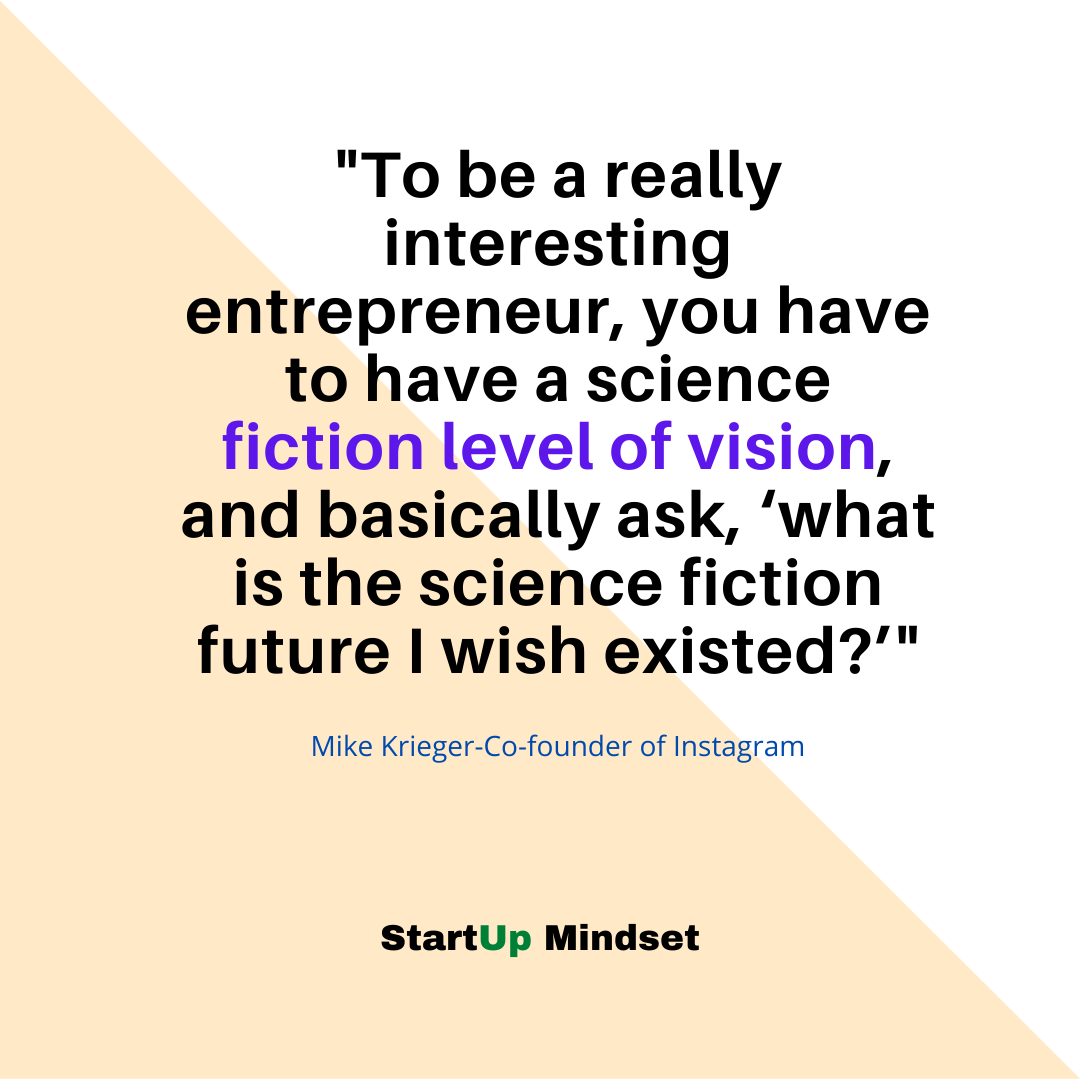
“To be a really interesting entrepreneur, you have to have a sci-fi level of vision and basically ask yourself, 'what is the sci-fi future I wish there was?', And then, 'how can I achieve that with today's technology. ? ' .
“To retain attention, you have to make sure you remain highly adaptable and continue to evolve the product. Instagram, as it was when it launched, was just square photos in a single feed, in chronological order and almost all of those words have changed. If you look at Instagram as it was two years ago when Kevin and I left, it continues to evolve. Now it's photos, videos and stories. Our feed is now personalized and you can post photos that are not square.
“I find that often companies get very caught up in the way things are and think that's why they succeeded when in reality, the way you keep your attention is always asking, 'What are we holding on to? We believe it is important, but our clients wish we would go from? '.
“Twitter went through this for a long time. They were maniacally on this 140 character thing, it was defining their entire company. And finally, they realized, 'wow, I think that might actually be holding back.' So they expanded it and now people can write longer, and I think those things are very easy to internally convince that they are almost sacred, when part of remaining relevant is always questioning those things. "
Q: What advice would you give young entrepreneurs who are about to enter the professional landscape?
“I think you should start by building something that you are personally passionate about.
“I have seen entrepreneurs fall into the trap of doing market research and investing in something that they think is a great opportunity, but entrepreneurship is a long game. If you're not passionate about what you're building, year two will feel like hard work, let alone years five through ten.
“It's solving the problem that you can't stop thinking about; You'll know it when you feel it You go to bed and start thinking about the problem. You wake up and you're excited, you want to tell your friends. It does not necessarily mean that it is something that only you are going to use, but something that you feel that the world is worse if it does not exist.
“So instead of starting with the goal of 'I want to be an entrepreneur' or 'I want to start a company', start with the goal that there is something in the world that you wish was different.And the best way to contribute to this is to start a business or create a product. Making sure you don't have that backwards is really important as a starting point.
“So it's important to explore your curiosity. I find that the best entrepreneurs are those who don't put themselves in a box and say: 'I know how to design, but I don't know how to do engineering' or 'I know how to create products, but I don't know how to do, I don't know how to market them.
“As an entrepreneur, you can't afford to hire a sales manager, a design manager, a product manager, a marketing manager, an HR manager. You and your co-founders have to wear all those hats right away. time. So if you're not curious to think, 'I might have never chosen a career as a sales manager, but if I need to do sales, where can I learn about that and how can I do it on my own in his own way, to the point where can we hire someone? '. It doesn't mean you'll be doing it forever. "
Q: Why is it important for companies to adapt and keep up with the latest trends in technology?
“Two things you can definitely count on is that technology will continue to evolve and people will always surprise you by the way they use that technology.
“That means you have to constantly adapt. We talked about small businesses before, if you asked me 15 years ago, 'can you create a fully digital showcase?' I could have said, 'no, you probably need people to come to the store and look at things themselves.' But suddenly that changed and Instagram created virtual store fronts for people. So if you stand still, both technology and people's expectations will leave you behind.
"And, on the other hand, it is necessary to ask, 'What is the trend that is around the corner?' I think this is what we did exclusively to create Instagram. We weren't trying to invent spaceships, we weren't trying to go to the moon; Those are great goals, but for other entrepreneurs. We always wondered, 'what is around the corner, that if we get it right, it will become completely universal'. You have to look ahead and say, 'what's about to explode if we can successfully create a really good product around it?' ”.
Q: If you could give yourself one piece of advice early in your career, what would it be?
“I have learned that I really do my best work when my life is really in balance. That means going outside. That means making sure the relationships in my life are well cared for and well maintained. It means to meditate. It means all these things that make a human being holistic.
“While in the short term it might seem like that extra hour is going to be productive, in the long run I think it will make you less complete and less creative.
"If I could go back, I would tell myself that I need to make sure I balance my time."
This interview was conducted in association with Champions Speakers who have unmatched access to some of the leading technology speakers.
Do you like this article? Receive email updates and get our FREE eBook


Ralph is the managing editor of StartUp Mindset. The StartUp Mindset team is made up of dedicated individuals and is designed to help new, experienced and aspiring entrepreneurs succeed.
Item Tags:
Business opportunities · Find your way · Grow your business · Instagram · social media · Technology · Your mindset
Item categories:
Grow your business · Leading your team · Marketing · Product development · Social media · Technology · Your mindset


 ES_MX
ES_MX  EN
EN